The Discipline of Choosing
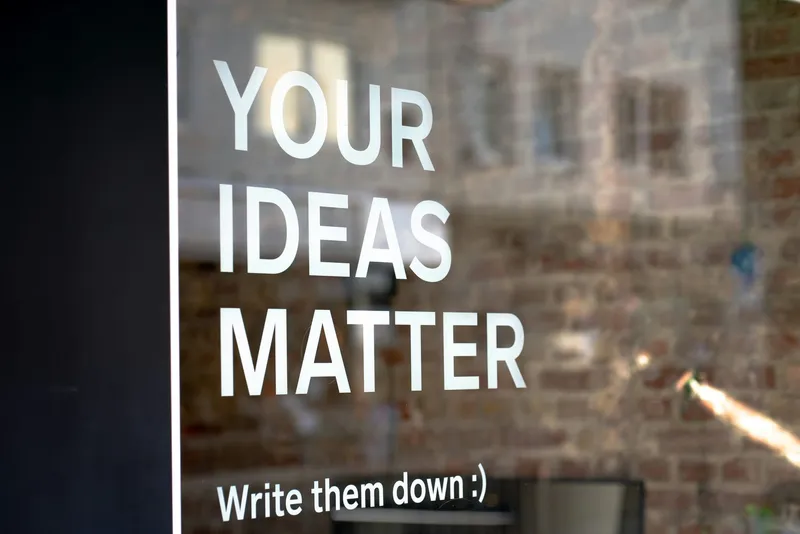
I don't know if you're like me, but sitting in your child's sports can leave one's mind to wander as they do their best. Third graders don’t perform the most exciting sports events, but you're there because you love them. However, because there's usually not too much happening, it leaves the mind to wander, thinking about what's happening and what you're planning, ideas that cluster around. At times, those ideas percolate and come to the forefront of your mind, sparking and inspiring you to think that this could assist you in your career. The belief that these ideas may help the family and household earn extra income to push you over the edge and meet those life goals, both professionally and personally.
The Problem With Too Many Ideas
If you're anything like me, you have a multitude of these ideas and inspirations on the regular, and they accumulate. I know that, for myself, I currently have 30 initiatives and 87 ideas that I have documented. I've set aside a collection of ideas I’ve come up with myself, and emails with great ideas, side hustles, and small business ideas I've received from different blogs and podcasts. The fact of the matter is that there's only one of me, and I have a small collection of hours in the day. I’m only able to attend to a certain selection of them, and, particularly for my personality, that is a hard pill to swallow. Another hard general rule of life is that success is experienced sequentially. Very rarely is it experienced in parallel. We can do certain one or two things well if we put our time and focus on them; we'll do a large collection of things poorly if we divide our attention improperly. I think many of us know that their aspiration goals could be achievable if they had additional resources and support; however, to achieve that level of access to support, they need to accumulate resources. They accumulate resources by getting really good at performing and delivering a set of tasks.
How Do You Actually Get There
So how do you actually get there? How do you move toward that endpoint where you have the resources, the support, and the margin to pursue the many things you believe could serve your family and your calling?
Ideas vs. Execution
The answer is far less exciting than the ideas themselves: you keep good notes, and you choose. You build a plan around what matters now, and you triage the rest. You rack and stack. You decide what gets your attention, and just as importantly, what does not. A lot of people burn out right here. The beginning is always energizing. A new idea feels like progress. It feels like movement. It gives that small dopamine hit that tricks you into thinking you’ve already moved the ball forward. But the reality is that ideas, on their own, don’t change your life. Execution does. Effort does. The unglamorous, repeated work is what actually moves the needle. And that work doesn’t just produce outcomes, it produces you. There’s a spiritual and psychological transformation that happens when you commit to something and see it through. Discipline, consistency, and steadiness aren’t just tools to reach the goal; they are the very things that make you into someone capable of carrying the weight of that goal when you arrive.
Discipline Changes You
If you become the kind of person who finishes, you increase the likelihood that many of those other ideas you’re holding onto might one day come to life as well. It’s okay to see yourself as someone with many interests, someone pulled in multiple directions by curiosity and creativity. But you are still one person, with a fixed number of hours in a day. And at some point, you have to come to terms with a harder truth: your time is finite. You will not get to everything.
You Are One Person With Finite Time
So the question becomes, what do you want your time to look like? Because once you answer that honestly, you also have to make peace with the fact that some ideas will never come to fruition. Not because they couldn’t, but because they shouldn’t, at least not now in this season of life. That’s why you write them down. That’s why you keep returning to your notes, your journal, your running list. You revisit, you reorder, you wrestle with what actually matters in this season of life. Your priorities should be grounded in reality, not just possibility. If you’re in a season with fewer obligations, there is a real opportunity there. It may not feel ideal, and there can be real loneliness in it, but it is also a time to build, to serve, to push forward with intensity. There is space to be hungry. But if you have a family, a wife, children, responsibilities that require your presence, then your constraints are real, and they matter. Your time is not your own in the same way. And you have to recognize that showing up for your family is not a distraction from your purpose; it is a central part of it.
Capture Ideas, But Return to the Present
So when the ideas come, and they will, capture them. Write them down. Then return your attention to what’s in front of you. Be present at the game. Be present at the dinner table. That presence is not lost productivity; it is an investment of a different kind. And for both groups, the principle remains the same: keep collecting ideas, keep journaling, keep thinking, but don’t let the feeling of progress replace actual progress. The small dopamine hits are easy. The real work is harder.
But the real work is what changes your life.